Will AI Replace Software Engineers in 2026? The Honest Answer
Will AI replace software engineers in 2026? A practical, evidence-based answer on what AI is changing, which roles are most exposed, and where strong engineers still win.
Every week, some version of the same question lands in my inbox:
"Should I still become a software engineer if AI can already write code?"
It is a fair question. AI tools are now good enough to make experienced developers faster, to automate parts of documentation and testing, and to scare the life out of anyone whose mental model of engineering is still "type code faster than the next person."
But if you want the honest answer, here it is:
AI is not eliminating software engineering. It is compressing low-value work, raising the bar for judgment, and making weak engineering habits more visible.
That distinction matters.
The current debate is full of lazy extremes. One side claims software engineering is dead. The other insists nothing meaningful has changed. Both positions are wrong, and neither helps you build a career.
Let’s look at what the data actually says.
If you want the full reading path around this topic, AI Career Guide for Software Engineers: Start Here connects the main articles.
What the Current Data Says
The World Economic Forum’s Future of Jobs Report 2025 does not paint a simple "AI destroys tech jobs" picture. Its January 2025 summary says software and applications developers remain among the fastest-growing roles through 2030, while AI and machine learning specialists, fintech engineers, and big data specialists are rising even faster.
The same report also says job disruption is real:
- 22% of jobs are expected to be disrupted by 2030
- 170 million new roles are projected to be created
- 92 million are projected to be displaced
- Nearly 40% of today’s skills are expected to change
That is not stability. But it is also not extinction.
Meanwhile, the 2024 Stack Overflow Developer Survey shows how developers actually feel on the ground:
- 76% of respondents are using or planning to use AI tools in their development process
- 70% of professional developers do not see AI as a threat to their job
- Only 43% say they trust the accuracy of AI output
- 45% of professional developers think AI tools are bad or very bad at handling complex tasks
That combination is telling. Developers are adopting AI quickly, but they do not trust it blindly.
And then there is enterprise reality. McKinsey’s The state of AI in 2025: Agents, innovation, and transformation reports that AI use continues to rise, but most organizations are still in pilot or early scaling phases. It also notes that meaningful enterprise-wide bottom-line impact remains limited for many companies. If you want the leadership-side version of that problem, A CTO’s Guide to AI Coding Tools picks up where this leaves off.
In plain English: adoption is real, hype is real, and mature execution is still uneven.
What AI Is Actually Replacing
The most immediate effect of AI is not replacing software engineers wholesale. It is replacing chunks of work that used to justify a surprising amount of headcount and ego.
AI is very good at:
- Generating first drafts
- Explaining unfamiliar code
- Writing boilerplate tests
- Summarizing logs and docs
- Translating patterns across languages and frameworks
- Producing a quick but imperfect implementation
That means it can absolutely reduce demand for engineers whose main value is:
- Turning straightforward tickets into predictable code
- Repeating known patterns with little design input
- Shipping without understanding the broader system
- Looking productive while senior people do the hard thinking
If your role is mostly mechanical transformation, yes, the ground is moving under you.
That is why junior and mid-level engineers should stop asking, "Can AI code?" and start asking, "What part of engineering cannot be reduced to autocomplete with confidence?"
What AI Still Cannot Do Reliably
This is where weak analysis breaks down. People see AI write code and assume it can do engineering. Those are not the same thing.
Engineering includes:
- Choosing the right problem to solve
- Defining the tradeoffs before implementation starts
- Understanding business context
- Handling ambiguity between teams
- Designing systems that survive production reality
- Knowing when a "working" answer is dangerously wrong
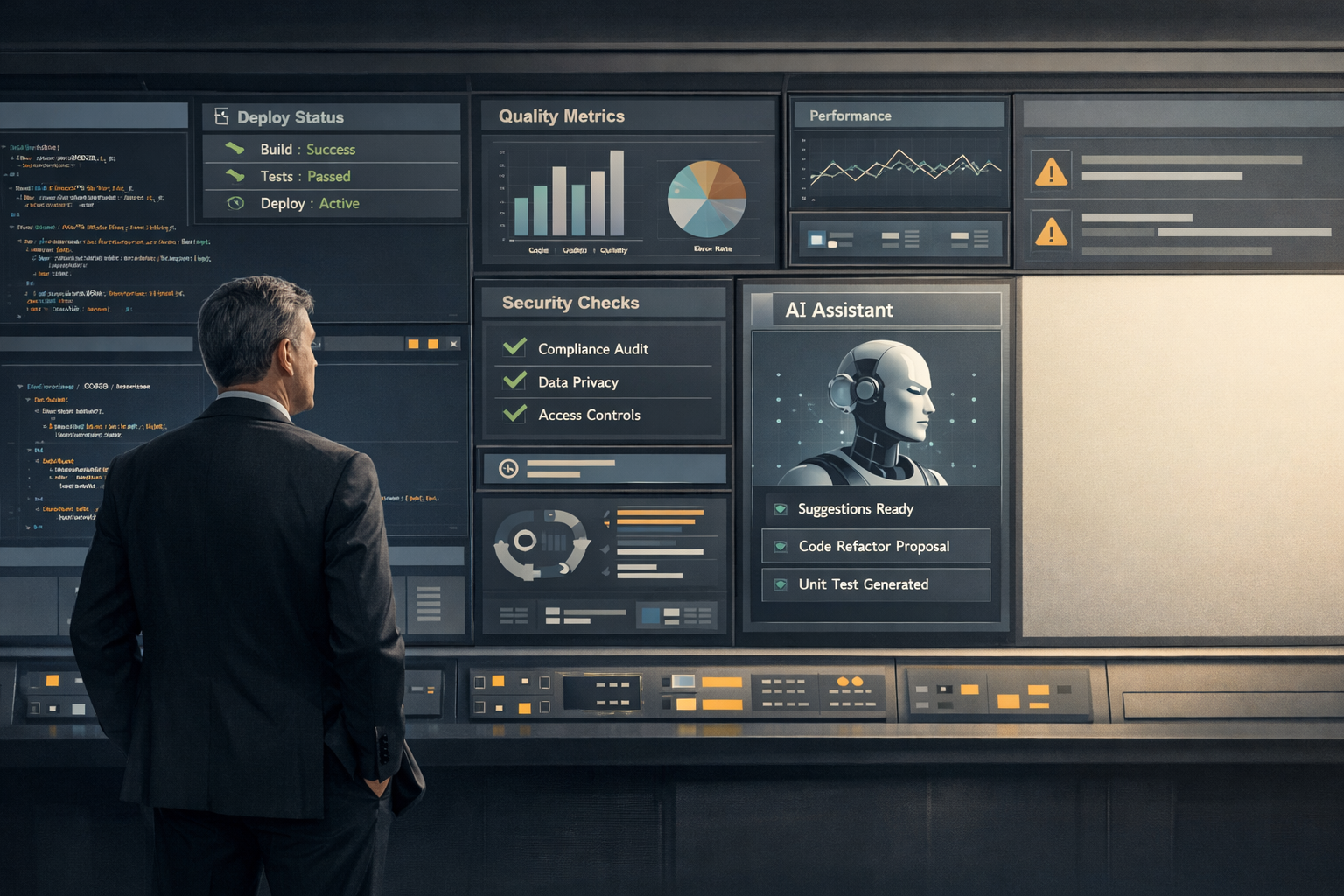
AI can assist with each of those. It still struggles to own them.
That maps directly to the Stack Overflow numbers. Developers like AI for productivity. They do not trust it enough to hand over complex work unsupervised. That is rational. Complex tasks are where context, edge cases, incentives, and real-world constraints pile up.
This is also why so many AI-heavy demos look more impressive than the systems behind them. A generated prototype can look finished while hiding fragile architecture, weak validation, and missing product judgment.
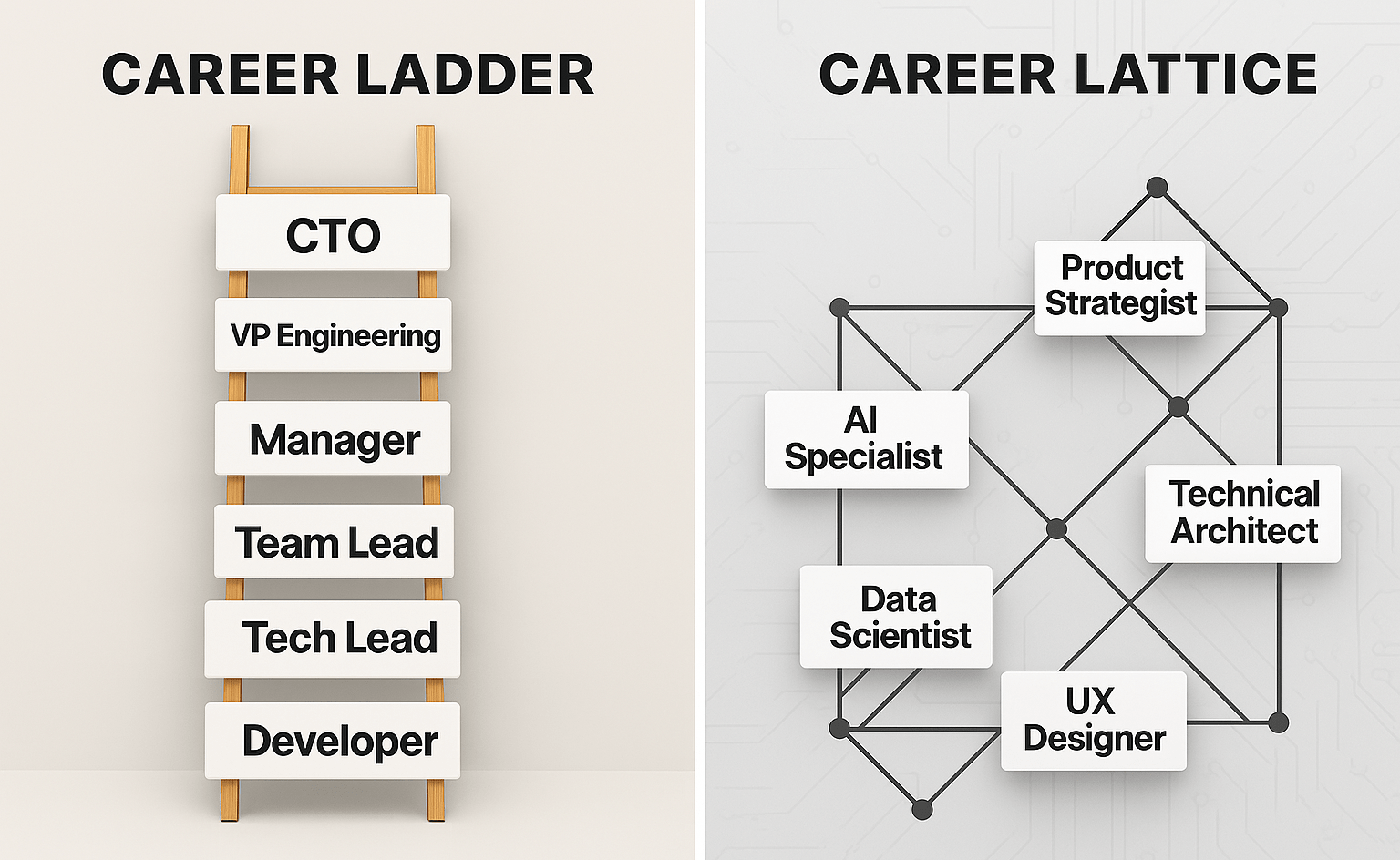
The Real Career Shift: From Code Producer to Decision-Maker
The engineers who will lose ground in the next few years are not "people who use AI" or "people who do not use AI."
The engineers who lose ground are the ones who never moved beyond implementation-only value.
The engineers who gain leverage will be the ones who can:
- Scope problems cleanly
- Evaluate AI output fast
- Ask sharper questions than the tool can
- Connect product decisions to technical execution
- Protect system quality while moving faster
- Communicate tradeoffs clearly to leadership
That is a very different bar from "be the fastest typist in the room."
If you are early in your career, this may feel unfair. In some ways, it is. Historically, people learned judgment by doing a lot of the grunt work first. AI compresses some of that apprenticeship path.
So you need to be more deliberate.
You cannot rely on repetition alone. You need feedback loops, system exposure, code review discipline, and real ownership earlier than previous cohorts did.
So Should You Still Become a Software Engineer?
Yes, if you want to solve problems, design systems, and build leverage through technology.
No, if your idea of software engineering is memorizing syntax and converting Jira tickets into code with minimal thought.
That version of the job is becoming less valuable.
The better framing is this:
AI is making software engineering more strategic, not less relevant.
That is good news for strong engineers. It is uncomfortable news for everyone coasting.
The World Economic Forum data supports this broader shift. Demand is growing for technology skills like AI, big data, and cybersecurity, but also for human capabilities such as analytical thinking, resilience, collaboration, and leadership. The winners will combine both.
In other words, the market is not asking for a narrower engineer. It is asking for a more complete one.
What To Do Next If You Want To Stay Valuable
If I were advising a developer today, I would focus on six things:
1. Use AI Every Week, But Grade It Ruthlessly
Do not be the person who avoids the tools out of fear.
Also do not be the person who pastes in output and calls it velocity.
Use AI to accelerate drafts, test ideas, and reduce low-value friction. Then review it like an adult who will be held accountable for the outcome.
2. Build System-Level Understanding
Learn how products actually work end to end:
- data flow
- failure modes
- security constraints
- operational cost
- stakeholder impact
That is where durable value lives.
3. Strengthen Communication
If AI writes more of the obvious code, your edge shifts toward explaining priorities, clarifying ambiguity, and aligning people around the right tradeoffs.
This is not a soft extra. It is core engineering leverage.
4. Get Good at Debugging Messy Reality
Generated code often works in the happy path and falls apart in the real one. The engineers who can debug production behavior, incomplete requirements, performance regressions, and integration failures will stay expensive.
5. Learn Enough Business Context To Make Better Technical Decisions
Teams do not need more code. They need better decisions.
Understanding pricing, compliance, customer risk, support cost, and delivery timelines makes you harder to replace than someone who only talks in frameworks.
6. Own Outcomes, Not Just Output
The future belongs to people who can say:
"Here is the problem, here is the tradeoff, here is the fastest safe path, and here is how we will know if it worked."
That is engineering leadership, whether or not you manage anyone.
Final Answer
Will AI replace software engineers?
Not in the simplistic way people keep saying.
AI will replace some tasks, compress some roles, expose weak performers, and change how teams are staffed. That is already happening.
But the demand for people who can combine technical depth, judgment, communication, and business context is not disappearing. If anything, it is becoming more important.
The better question is not whether software engineering survives.
It does.
The real question is whether your version of software engineering evolves fast enough to stay valuable.
If you want the broader career lens behind that shift, read Beyond the Binary: Reimagining Technical Career Paths for the AI Era and Building AI Agents That Actually Work: Lessons from a $47 Billion Market.
Want The Full Framework?
The insights bring in traffic and help you think clearly. The book is the structured version if you want the complete path from writing to career leverage.